

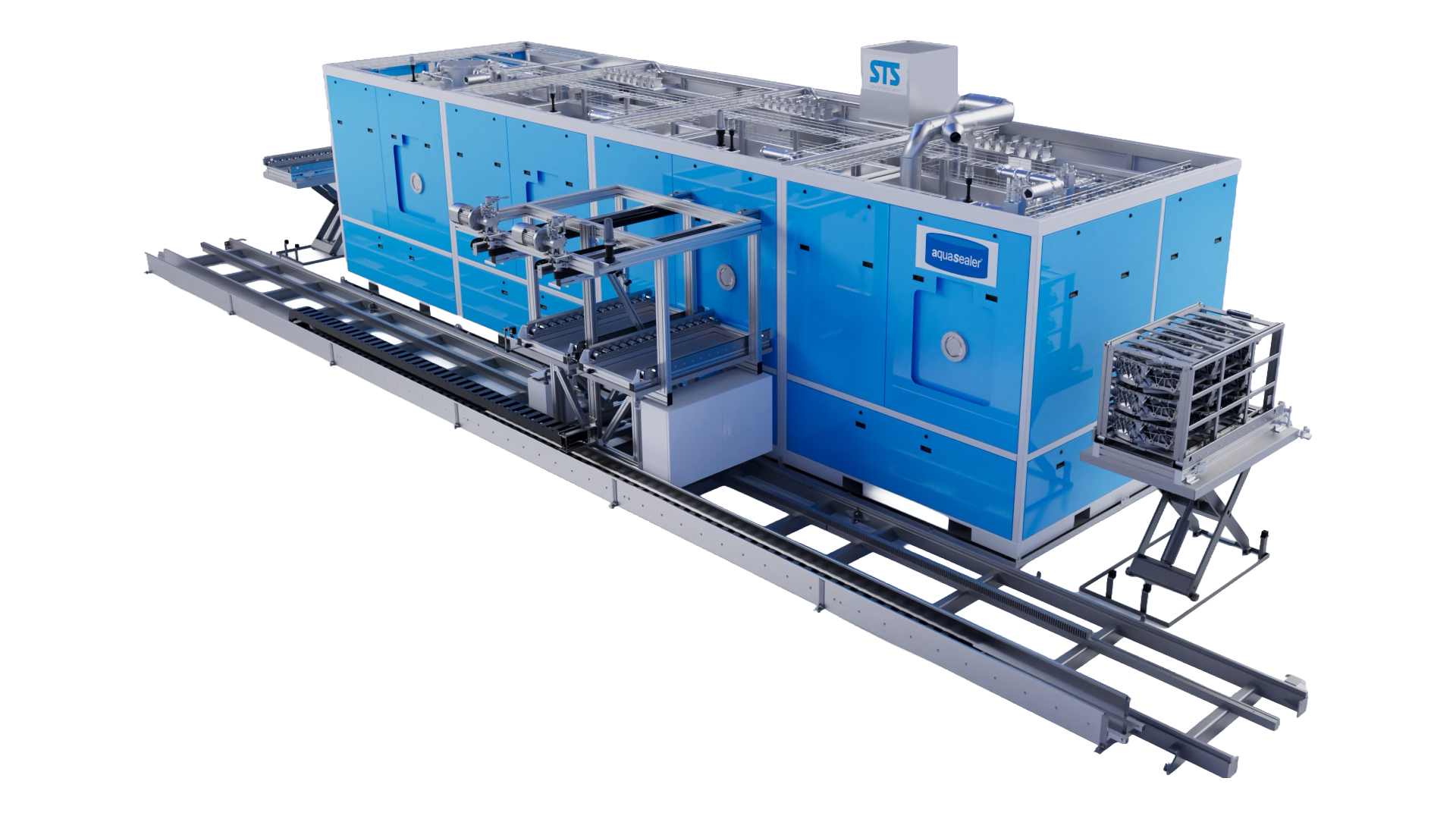
STUDY OF MICROPOROSITY AND IMPREGNATION PROTOCOLS 4.0
Technical Supervision: Cisotto Giorgio
1.TYPES OF MATERIALS SUITABLE FOR TREATMENT
Impregnation treatment is not limited to a single metal, but extends to a wide range of materials that exhibit intrinsic or structural porosity.
1.1 Light Alloys and Die Castings
- Aluminum and its alloys: This is the most commonly treated material. Aluminum die casting is subject to turbulence and shrinkage, which generates diffuse porosity.
- Magnesium: Used for its lightness, it requires impeccable impregnation to prevent internal corrosion and ensure watertightness.
1.2 Ferrous Metals and Cast Iron
- Lamellar and Ductile Iron: Often subject to micro-shrinkage voids, especially in sections with variable thicknesses.
- Cast Steel: Treated to ensure water resistance in high pressure applications.
1.3 Sintered Materials (Powder Metallurgy)
- Sintered Steel: By its very nature, sintered parts are porous. Impregnation is mandatory to close the pores before any galvanic treatment (nickel plating, chrome plating) to prevent the release of acids.
- Bronze and Sintered Brass: Often used for bushings or filter components where selective sealing is essential.
- ANALYTICAL ANALYSIS OF MICROPOROSITY
Correct identification of void morphology is the first step to ensure a seal that complies with MIL-I-17563C standards . Three structural porosity patterns affecting castings and sintered materials have been defined.
2.1 Open Porosity (Through Channels)
- Visual Description : It appears as a micro-channel or a tortuous tunnel that puts two opposite surfaces of the artefact in direct communication.
- Technical Impact : This is the most critical form of defect; it causes immediate loss of pressure, the seepage of liquids and the passage of gases.
- Treatment : Thanks to the AQUASEALER® method , the resin saturates the entire length of the canal, creating a permanent structural plug.
2.2 Closed Porosity (Superficial)
- Visual Description : A void that communicates with the outside through a single surface opening.
- Technical Impact : Extremely damaging to galvanic treatments (nickel plating, chrome plating). Acidic bath liquids penetrate the pores, resist washing, and resurface after finishing, causing stains, blisters, and corrosion.
- Treatment : Impregnation seals the entrance to the pore, preventing chemical agents from penetrating and ensuring a perfect surface.
2.3 Blind Porosity (Internal)
- Visual Description : A cavity contained entirely within the metal mass, with no immediate surface outlet.
- Technical Impact : This represents a “latent risk.” These porosities are often overlooked during the impregnation of the rough part.
- Machining Risk : When the tool (cutter or drill) removes the stock, it can cut a blind porosity, instantly transforming it into open or closed porosity.
3.EXAMPLES OF PRODUCTS AND INDUSTRIAL APPLICATIONS
Impregnation finds application wherever watertightness or surface perfection is required.
3.1 Automotive and Transportation Sector
- Gearboxes and Chain Side Covers: They must retain lubricating oils without seeping.
- Components for Gas Systems (LPG/Methane): Reduction bodies and nozzles that require an absolute seal for safety reasons.
- Flanges and Engine Mounts: Structural components that must withstand external stresses and agents.
3.2 Hydraulics and Pneumatics
- Valve Bodies and Hydraulic Blocks: Subjected to extremely high pressures where microporosity would cause a drop in performance or dangerous leaks.
- Components for Submersible Fluid Pumping Systems: They must guarantee total insulation between the inside and the outside.
3.3 Hydraulics and Gas Management
- Gas Nozzles and Air Reducing Bodies: Sealing accuracy is essential for proper flow operation.
4.THE MIL REGULATORY FRAMEWORK: MATERIAL REQUIREMENTS
The Cisotto Giorgio protocol integrates military specifications to guarantee repeatable and certified results.
4.1 MIL-I-17563C: Sealant Requirements
This standard establishes the characteristics of the impregnating material before and after polymerization:
- Pre-Impregnation Requirements (Liquid State):
- Controlled Viscosity: Must penetrate microscopic pores by capillary action.
- Chemical Stability: The sealant must not react or degrade before use.
- Post-Impregnation Requirements (Solid State):
- Thermal Resistance: Seal integrity from -55°C to +204°C .
- Chemical Inertia: Total resistance to hydrocarbons, oils, solvents and coolants.
- Pressure Resistance: The sealant must not extrude from the pore even under extreme hydraulic loads.
4.2 MIL-STD-276A: Process Methodology
Defines the procedures for Method A (Vacuum and Pressure) , the heart of the AQUASEALER® technology :
- Dry Vacuum: Total extraction of air from the pores.
- Resin Immersion: Under vacuum to ensure saturation of voids.
- Polymerization at 90°C: Transformation of the resin into an inert solid through heat.
According to the military standard MIL-STD-276A , which regulates the standard impregnation process for castings and sintered metal components, the requirements to be met before starting the impregnation cycle are extremely stringent.
Here are the key points to respect to ensure compliance with the standard:
4.3 Cleaning and Preparation Requirements
The standard states that surfaces, including internal pores, must be perfectly clean of contaminants to allow the sealant to penetrate.
- Contaminant Removal : All parts must be free of oil, grease, coolants, dirt and machining residues.
- Cleaning Methods : Use detergents that do not damage the base material or leave residues inside the pores. The AQUAROLL® system using ROLLCLEAN® is preferred.
- Drying : The components must be completely dry. Any trace of moisture or liquid inside the pores will prevent the sealant from filling the void, invalidating the treatment.
4.4 Timing of Mechanical Processing
A fundamental requirement, strongly underlined and foreseen by MIL-STD-276A , concerns the progress of the piece:
- Completion of Machining : Unless otherwise specified, impregnation must be carried out after all mechanical machining (milling, drilling, turning) has been completed.
- Porosity Exposure : This requirement is necessary because chip removal can open previously closed “blind” porosities; if the treatment were to occur earlier, these new openings would remain unsealed.
5. Material State (Pre-Impregnation)
The standard classifies components according to their nature:
- Castings : These must be checked to ensure that defects are limited to microporosity and not structural cracks or macroscopic defects that compromise the integrity of the part.
- Sintered (Powder Metal Parts) : They must be in “as-sintered” or post-machined condition, ready to receive the sealant which will increase their surface density and workability.
6.THE SEQUENCE DOGMA: POST-MECHANICAL PROCESSING
The effectiveness of the treatment is linked to the timing of production.
Impregnation must always follow mechanical processing.
If the treatment were performed on the raw part, chip removal (milling, turning) would eliminate the sealed layer, exposing internal blind porosities that would thus become new leak paths. By treating the finished part, any porosity “opened” by the tool is intercepted and permanently closed.
According to MIL-STD-276A , the material, after completing the entire impregnation and polymerization cycle, must meet stringent requirements to be considered compliant.
Here are the specifications that the product must present in the post-treatment phase:
7.Leakage and Integrity Requirements (MIL-STD-276A)
The primary requirement after impregnation is to achieve the functionality for which the treatment was performed:
- Watertightness : The material must be totally impermeable to fluids (liquids or gases) under the specific pressure conditions of the project.
- Leak-Free : After treatment, the parts must pass the required testing (hydraulic or pneumatic tests). If a part continues to leak, the porosity is classified as a “structural defect” and not microporosity.
- Seal Stability : The resin inside the pores must be solid, inert and must not show signs of extrusion or degradation.
7.1 Surface Conditions and Cleaning
The post-treatment piece must regain its original aesthetic and dimensional characteristics:
- No Residue : The external surface, blind holes, and threads must be completely free of excess resin. This is achieved through the centrifugation and thorough washing phases in AQUASEALER® systems .
- Suitability for Subsequent Treatments : The material must be clean and ready for any surface finishes, such as chemical nickel plating or painting, without risk of “bleeding” (liquid leakage from the pores).
8.Properties of Cured Sealant (MIL-I-17563C)
The MIL-STD-276A standard refers to MIL-I-17563C to define how the polymerized resin must behave inside the metal matrix:
- Thermal Resistance : The sealant must maintain its mechanical integrity and sealing ability in a temperature range from -55°C to +204°C .
- Chemical Inertia : The impregnated material must be resistant to:
- Lubricating oils and hydraulic fluids.
- Fuels and hydrocarbons.
- Solvents and coolants.
- Mechanical Resistance : The cured sealant must be able to withstand high pressures, at least as strong as the metal itself, ensuring that the microporosities (Open, Closed or Blind) remain permanently sealed.
9.Post-Treatment Porosity Analysis
Here’s what the different porosities look like after a correctly performed treatment:
- Open Porosity : Now saturated with resin, it prevents the passage of any fluid through the metal wall.
- Closed Porosity : Sealed at the entrance, prevents the absorption of galvanic acids, ensuring mirror-like surface finishes.
- Blind Porosity : If the treatment was carried out after mechanical processing , these porosities, possibly exposed by the tool, are now filled and neutralised.
10.CONCLUSIONS
Through the use of AQUAROLL® systems for washing and AQUASEALER® for sealing, impregnation ensures that critical materials such as aluminium and sintered materials reach excellent reliability standards, eliminating waste and guaranteeing the functional and aesthetic perfection required by the modern market.